

Printed circuit boards (PCBs) are essential components in industrial electronic systems, providing the electrical connections required for equipment monitoring, automation, power management, and process control. From manufacturing plants and energy facilities to transportation systems and industrial machinery, reliable electronic assemblies help maintain operational efficiency and consistent performance. As industrial applications become more sophisticated, manufacturers require PCB assemblies designed to meet demanding electrical, mechanical, and environmental conditions.
Industrial PCB assembly involves mounting electronic components onto circuit boards used in industrial equipment and control systems. Unlike many consumer electronics applications, industrial products may operate continuously, experience temperature fluctuations, or encounter vibration, dust, and electrical interference. These conditions make component selection, manufacturing precision, and quality testing particularly important. Understanding the assembly process, benefits, and applications helps businesses choose suitable manufacturing solutions for their industrial electronics projects.
What Is Industrial PCB Assembly?
Industrial PCB assembly is the process of installing and soldering electronic components onto printed circuit boards designed for industrial applications. These assemblies support functions such as motor control, equipment monitoring, data acquisition, power conversion, and communication between machines.
Depending on the application, an industrial circuit board may contain microcontrollers, power semiconductors, sensors, relays, connectors, capacitors, and communication modules. The design may also incorporate multilayer construction, specialized materials, protective coatings, or enhanced thermal management.
The assembly method depends on the board design and component requirements. Surface-mount technology (SMT) is widely used for compact components and automated production, while through-hole technology is often suitable for larger components or applications requiring additional mechanical support. Some industrial boards combine both methods to achieve the required functionality and durability.
How Does the Industrial PCB Assembly Process Work?
A structured manufacturing process helps ensure that industrial circuit boards meet their technical specifications and operate reliably in their intended environments.
1. Design Review and Manufacturing Preparation
The process begins with reviewing the PCB design, bill of materials (BOM), Gerber files, component placement data, and assembly drawings. Engineers evaluate whether the design can be manufactured efficiently and whether the selected components meet the application's electrical and environmental requirements.
A design-for-manufacturing (DFM) review can identify potential issues involving component spacing, solder pad dimensions, thermal management, and accessibility for inspection. Resolving these issues before production helps reduce assembly errors and costly design revisions.
2. Component Sourcing and Verification
Industrial electronics may require specialized components with particular voltage ratings, temperature ranges, lifespans, or power-handling capabilities. Manufacturers must source components that match the approved specifications and verify their authenticity and suitability.
Component availability is also important because discontinued or long-lead-time parts can affect production schedules. Approved alternatives may be considered when necessary, but substitutions should undergo appropriate engineering review before use.
Reliable sourcing and component traceability help maintain consistency across manufacturing batches and support quality investigations when required.
3. PCB Fabrication and Preparation
The circuit board is fabricated according to the design requirements, including its dimensions, layer count, copper thickness, and surface finish. Standard FR-4 materials may be suitable for many control boards, while high-temperature, flexible, or metal-core materials may be needed for specialized applications.
Industrial boards carrying significant current or operating in elevated-temperature environments may require particular attention to conductor dimensions, insulation properties, and heat dissipation.
Once fabrication is complete, the boards are prepared for component mounting and soldering.
4. Component Placement and Soldering
During assembly, electronic components are positioned on the board and soldered to establish mechanical and electrical connections.
Automated pick-and-place equipment is commonly used for SMT components, followed by reflow soldering. Through-hole components may be installed manually or through automated processes, with wave soldering or selective soldering used where appropriate.
The manufacturing team selects suitable soldering methods based on the component package, board construction, and production volume. Process control is essential because poor solder joints can cause intermittent connections, electrical failures, or premature product malfunction.
5. Inspection and Functional Testing
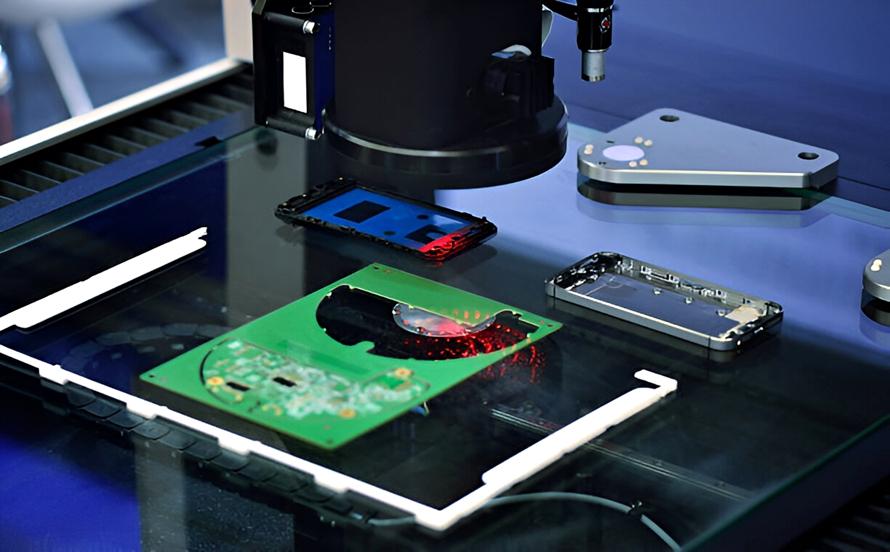
After soldering, the completed boards undergo inspection and testing. Automated optical inspection (AOI) helps identify visible defects, including incorrect component placement, solder bridges, and certain soldering irregularities. X-ray inspection may be appropriate for hidden connections beneath particular component packages.
Electrical testing, in-circuit testing, and functional testing can help confirm that the assembly performs according to its specifications. Additional environmental or reliability testing may be required for products operating under demanding conditions.
The specific inspection plan should reflect the application's risks, quality requirements, and relevant industry standards.
Key Benefits of Industrial PCB Assembly
Industrial electronic assemblies offer several advantages when designed and manufactured to suit their operating environments.
Improved Operational Reliability
Industrial equipment often needs to operate for extended periods with minimal interruption. Appropriate component selection, controlled soldering processes, and thorough testing help reduce the likelihood of assembly-related failures.
Reliability also depends on circuit design, maintenance conditions, component ratings, and the environment in which the equipment operates.
Support for Automation and Process Control
Industrial PCBs enable communication between sensors, controllers, actuators, and monitoring systems. These connections allow equipment to collect information, execute programmed operations, and respond to changes in operating conditions.
Well-designed circuit boards help support accurate control and coordination across automated production processes.
Efficient Power Management
Many industrial applications depend on power supplies, motor drives, inverters, and battery systems. PCB assemblies designed for these functions must account for current capacity, switching behavior, thermal performance, and electrical protection.
Appropriate component selection and board layout help support efficient power distribution and stable operation.
Flexible Design and Integration
Industrial PCB designs can be tailored to particular machine configurations, communication interfaces, and installation requirements. Custom layouts may also combine multiple functions on one board, reducing wiring complexity and simplifying equipment integration.
This flexibility is valuable for specialized machinery and industrial products with unique technical requirements.
Common Applications of Industrial PCB Assembly
Industrial circuit board assemblies are used in many sectors where electronic control and monitoring are essential.
Factory automation: Programmable logic controllers, motor controllers, robotics, and production monitoring systems rely on PCBs to manage machine operations and communication.
Energy and power systems: Power supplies, renewable energy equipment, inverters, and monitoring systems use electronic assemblies for power conversion and system control.
Industrial instrumentation: Measurement devices, data acquisition equipment, and process monitoring systems use circuit boards to collect and process operational information.
Transportation and heavy equipment: Selected control systems, diagnostic devices, and equipment monitoring modules require PCBs designed for vibration and changing environmental conditions.
Building management: HVAC controllers, access systems, and industrial lighting controls use circuit boards to automate and monitor building functions.
Industrial communication: Networking equipment, communication gateways, and interface modules help connect machines and control systems across industrial facilities.
Each application has distinct requirements, making appropriate design, assembly, and testing procedures essential.
Factors to Consider When Choosing an Industrial PCB Assembly Manufacturer
Selecting a manufacturing partner involves evaluating more than production cost. Technical capability and quality management are equally important.
First, assess the manufacturer's experience with the required board types, component packages, assembly technologies, and production volumes. The supplier should be able to support the project's electrical and mechanical specifications.
Second, review component sourcing and traceability procedures. Reliable procurement practices help reduce the risk of counterfeit or unsuitable components and support consistent production.
Third, examine the manufacturer's inspection and testing capabilities. AOI, X-ray inspection, electrical testing, and functional verification may be necessary depending on the assembly design.
It is also important to consider lead times, production flexibility, engineering communication, and the ability to support future revisions. For equipment intended for regulated or safety-critical environments, verify that the manufacturer's quality systems and available documentation meet the project's applicable requirements.
Conclusion
Industrial PCB assembly plays an important role in manufacturing automation, power management, instrumentation, and industrial communication systems. By combining suitable materials, reliable components, controlled soldering processes, and application-specific testing, manufacturers can produce circuit boards that meet demanding operational requirements.
When evaluating Industrial PCB Assembly Services, businesses should consider manufacturing expertise, component traceability, quality assurance procedures, testing capabilities, and production flexibility. Selecting a qualified partner helps support dependable equipment performance, reduce manufacturing risks, and maintain consistent quality throughout the product lifecycle.
