

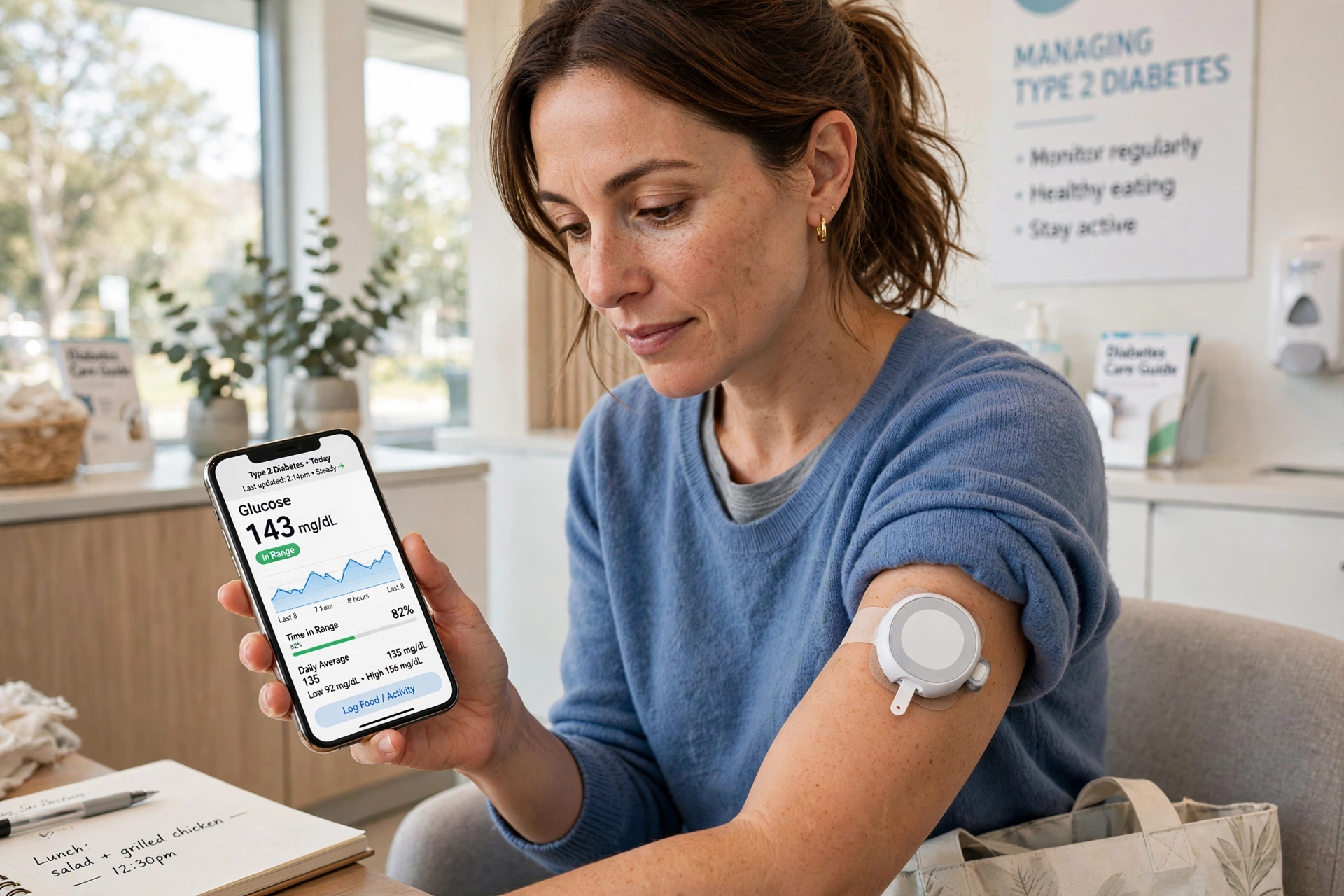
Continuous glucose monitors are changing how type 2 diabetes is managed, even for people who do not use insulin. The largest clinical trial of its kind, published in the New England Journal of Medicine, found that adults with type 2 diabetes who wore a continuous glucose monitor (CGM) spent approximately five more hours each day in their target blood sugar range than those relying on traditional finger-prick testing alone.
What the Trial Found
Researchers followed adults whose diabetes was managed with diet, oral medication or other non-insulin treatments. Instead of a handful of readings a day, CGM users received a near-constant stream of glucose data, updated every few minutes from a small sensor worn on the arm or abdomen. That visibility mattered. Participants could see, in real time, how a meal, a walk or a stressful meeting moved their blood sugar, and adjust their behaviour the same day rather than waiting months for an HbA1c result.
The result, reported by the University of Colorado Anschutz Medical Campus, was roughly five extra hours per day spent in the healthy target range — a clinically meaningful improvement linked, over time, to lower risks of eye, kidney, nerve and cardiovascular complications.
Why Time in Range Matters
Doctors increasingly judge diabetes control by “time in range” rather than a single average. Two patients can share the same HbA1c while one swings between dangerous highs and lows and the other stays steady. CGMs expose those swings. Alerts warn of a coming low, trend arrows show whether glucose is rising fast, and weekly reports help clinicians fine-tune medication without guesswork. Readers following our health coverage can also browse recent stories on the site, including How to Prepare for a Support Conversation, for more context on everyday wellbeing.
Who Stands to Benefit Most
The findings strengthen the case for widening CGM access beyond insulin users, a group historically prioritised by insurers. Millions of adults with type 2 diabetes manage their condition without insulin, yet still face long-term complication risks driven by prolonged high blood sugar. A wearable sensor that quietly coaches better choices — a smaller portion, a ten-minute walk after lunch — can compound into major health gains across a population.
Cost and coverage remain the main barriers. Sensors are replaced every 10 to 14 days, and out-of-pocket prices deter many patients. Trial evidence of this scale gives patient groups and clinicians stronger ammunition in coverage negotiations. The New England Journal of Medicine publication adds weight that payers find hard to ignore.
Practical Tips if You Are Considering a CGM
First, talk to your diabetes care team about whether a monitor fits your treatment plan and insurance. Second, use the data gradually: look for patterns after meals rather than reacting to every spike. Third, pair readings with simple habits — walking after eating, steady sleep and consistent medication timing. Finally, review the weekly summary with your clinician so the numbers translate into decisions. For more practical reading, see Common Rummy365 Problems and How to Fix Them on this site.
What the Evidence Means for Daily Life
For people living with type 2 diabetes, the most exhausting part of the condition is often the uncertainty: not knowing whether a normal-looking meal has quietly pushed blood sugar far above target. Continuous monitoring removes much of that guesswork. Participants in studies like this one commonly report greater confidence eating out, exercising and travelling, because they can check a trend arrow instead of guessing. Clinicians say that confidence has its own value, encouraging patients to stay engaged with their care rather than avoiding measurements altogether.
The trial also highlights a shift in how diabetes technology is judged. Regulators and guideline committees once asked mainly whether a device lowered HbA1c. Now they also ask whether it improves time in range, reduces hypoglycaemia anxiety and fits real routines — charging, sensor changes and data sharing with family members. A device people actually wear for months delivers more benefit than a theoretically superior one abandoned in a drawer after two weeks.
The Bottom Line
This trial does not suggest technology replaces medication, diet or medical advice. It shows that timely information helps people use those tools better. Five more hours a day in range, multiplied across months and years, is a powerful argument for making glucose sensing a standard part of type 2 diabetes care — not a privilege reserved for insulin users alone.
