

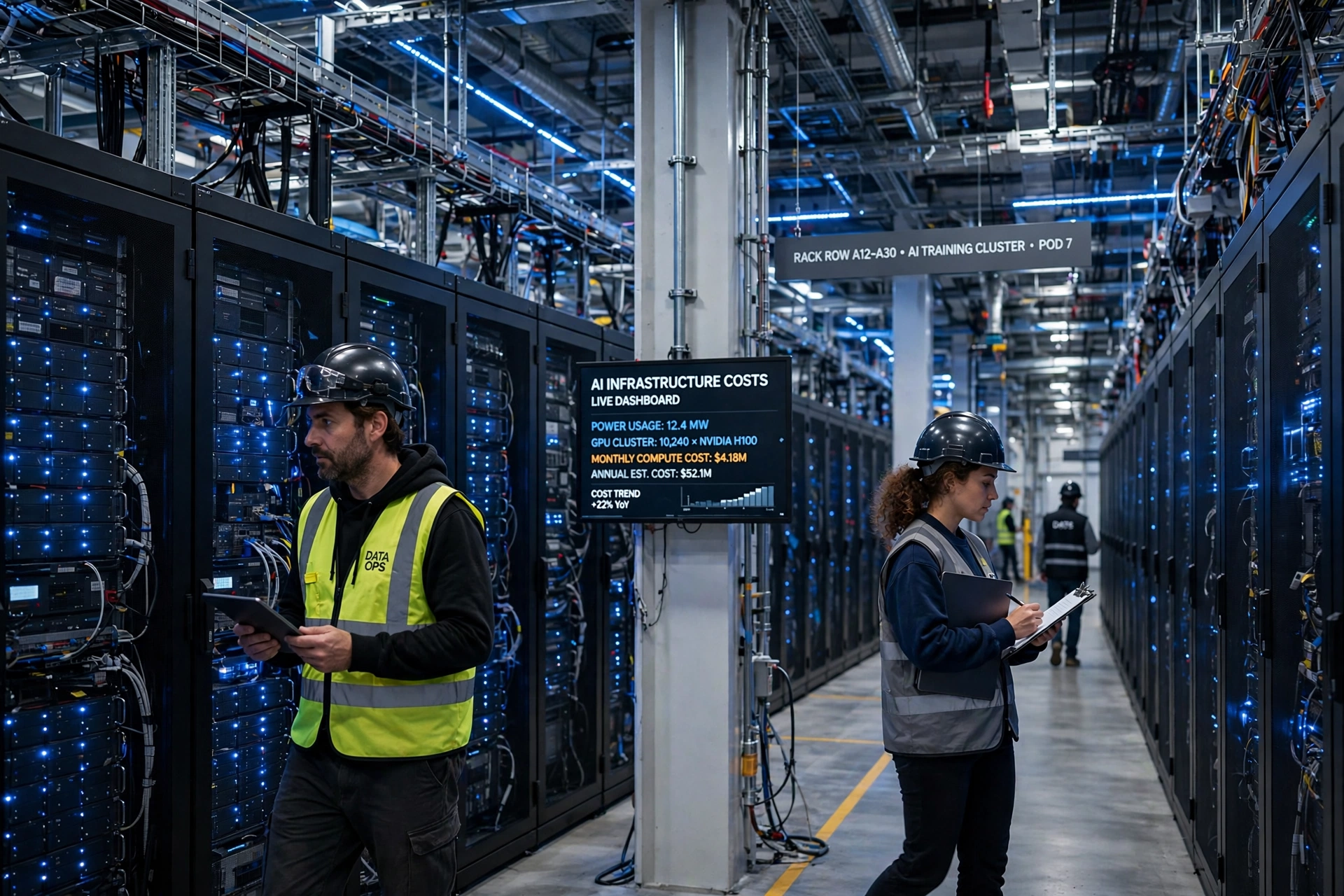
The maths behind the artificial intelligence boom is getting harder to ignore. New analysis circulating this week argues that paying for AI’s vast new data centers would take the equivalent of 250 million jobs — in an economy, the United States, that employs about 159 million people. At the same time, infrastructure spending forecasts are set to outstrip the revenue the technology is expected to produce, a gap examined in depth by The Register.
A Building Programme Like No Other
Technology giants are pouring hundreds of billions of dollars into data centers, chips, cooling and power connections. Each new facility can cost more than a sports stadium, yet fill with servers that begin ageing the moment they are installed. The spending is driven by fear as much as optimism: no major firm wants to be the one that under-invested if AI transforms every industry. Our business readers can follow related coverage in stories such as How to Prepare for a Support Conversation.
Where the Numbers Strain
The concern, detailed in analysis shared by Post-Quantum, is simple arithmetic. If the total bill for AI infrastructure keeps climbing while realistic, near-term revenue from subscriptions, advertising and enterprise contracts grows more slowly, investors eventually have to bridge the difference. Comparing the required spending with national employment is a vivid way of showing the scale: the implied productivity gains would need to be historically unprecedented to pay the bill on schedule.
Power, Land and Local Pushback
Money is not the only constraint. Data centers need enormous amounts of electricity and water, and grid connections in popular regions already carry long waiting lists. Communities that once competed for these projects now ask harder questions about energy prices, noise and how many permanent jobs a largely automated facility actually creates. Those tensions are slowing some projects and pushing builders toward regions with surplus renewable power.
What Happens Next
Sceptics do not argue AI is useless; they argue about timing and price. Previous technology waves — railways, fibre-optic cable, cloud computing — all saw overbuilding followed by a shakeout, after which the surviving infrastructure powered real growth. A similar pattern here would reward efficient operators and punish spending done purely for show. For more on how technology shifts land in the wider economy, read Common Rummy365 Problems and How to Fix Them.
Jobs, Productivity and the 250 Million Figure
The eye-catching comparison — that paying for AI’s data centers would take 250 million jobs in a country employing 159 million people — is not a literal hiring plan. It is a way of expressing how much productive value the spending assumes. If AI tools genuinely make every worker faster, help small firms do work they could never afford, and create entirely new services, the returns could arrive. If, instead, the main gains flow to a handful of platform owners while costs are spread across energy bills and public infrastructure, the political backlash will grow alongside the electricity demand.
History offers a useful middle path. When cloud computing looked overhyped, prices fell, usage widened and thousands of ordinary businesses quietly became more efficient. AI could follow the same arc: an expensive, speculative build-out, a correction, then a long period of practical adoption at prices normal companies can afford. The difference this time is speed — the sums involved, and the power stations needed to support them, are being committed in years rather than decades.
Signals to Watch in the Coming Months
Investors and policymakers will be watching four signals closely: whether enterprise customers renew AI contracts at higher prices, whether waiting lists for grid connections shorten, whether efficient smaller models reduce the need for ever-larger facilities, and whether regulators start treating data center energy use as a planning issue rather than a private matter. Each signal says something about whether revenue can close the gap with spending before patience runs out.
The Bottom Line for Businesses
For companies buying AI services, the practical advice is to focus on measurable returns: hours saved, errors reduced, revenue earned. For investors, the spending-versus-revenue gap is now the key chart to watch each earnings season. The AI build-out is real, historic and transformative — but as this week’s analysis shows, even revolutions have to balance their books eventually.

1 Comment
Pingback: Identifying Compressor Failures Before They Affect Sub-Zero Cooling Systems - Paid For Articles