

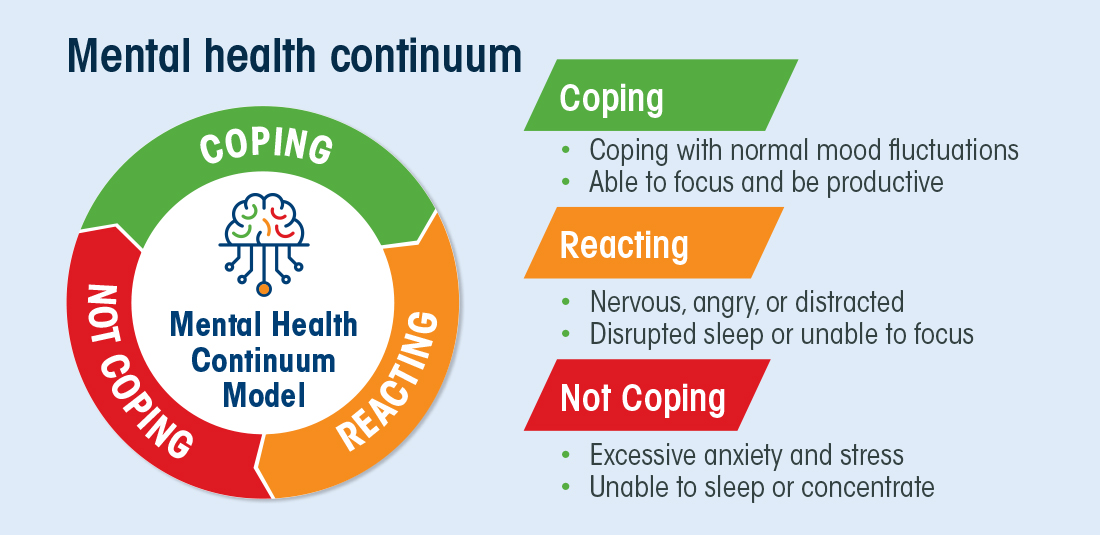
Mental health has emerged as one of the most pressing workplace concerns across Australia. The cost of poor mental health in the workplace — measured in lost productivity, absenteeism, staff turnover and workers compensation claims — runs into billions of dollars annually. Behind these figures are real people experiencing distress, and organisations that take this issue seriously are better for both their people and their bottom line.
Awareness of mental health at work has improved considerably over the past decade, but awareness alone is not sufficient. Workplaces need practical strategies, genuine cultural change and adequate support structures to meaningfully reduce the mental health burden on their workforce. The gap between knowing that mental health matters and actually doing something about it remains significant in many Australian organisations.
The scale of mental health challenges at work
According to research from Beyond Blue and Safe Work Australia, mental health conditions are responsible for approximately twelve per cent of all workers compensation claims in Australia, but account for nearly a third of all claim costs due to their significantly longer duration. Anxiety, depression and work-related stress are the most commonly reported conditions, and they affect people across every industry, level and demographic.
Access to professional support is central to effective workplace mental health management. Organisations that engage qualified workplace psychologists in Australia give employees access to expert assessment, early intervention and evidence-based treatment. These professionals work within organisations to identify at-risk individuals, build psychological resilience and provide a confidential resource for employees who are struggling but may not know where to turn.
The stigma associated with mental health conditions, while decreasing, remains a significant barrier to help-seeking in Australian workplaces. Workers who fear being judged, passed over for promotion or treated differently after disclosing a mental health concern are less likely to seek support early. Addressing stigma requires deliberate cultural effort, including visible leadership engagement and open organisational communication about mental health as a normal aspect of human experience.
Creating a mentally healthy work environment
Work design is one of the most significant determinants of mental health in the workplace. Jobs that involve excessive demands with insufficient resources, limited autonomy, poor relationships, unclear expectations or lack of recognition are inherently more likely to produce psychological distress. Reviewing work design from a mental health perspective — through job analysis, workload assessment and feedback from employees — can identify structural contributors to poor wellbeing.
Psychological safety — the sense that it is safe to speak up, make mistakes and be honest in the workplace — is a fundamental enabler of good mental health. Teams with high psychological safety tend to perform better, report lower levels of stress and have stronger interpersonal relationships. Leaders who actively model vulnerability, openness and non-defensive responses to challenge create the conditions for psychological safety to exist.
Flexible work arrangements have significant positive effects on mental health for many employees. The ability to adjust working hours, work from home periodically or reduce hours during difficult personal periods reduces the conflict between work and life demands that is a primary driver of work-related stress. Genuine flexibility — not flexibility in name only — requires trust, clear expectations and supportive management practice.
Early intervention and employee assistance programmes
Employee Assistance Programmes, or EAPs, are confidential counselling and support services available to employees and often their immediate family members. They provide short-term psychological support for a wide range of issues including work-related stress, relationship difficulties, financial concerns and mental health conditions. EAPs are one of the most widely used and cost-effective mental health support tools available to Australian employers.
For businesses in regional areas, supporting local communities and economies can also be part of a broader wellbeing and culture strategy. Small touches that connect teams to their community — whether in metropolitan centres or regional hubs like Bassendean, Western Australia — help employees feel grounded and connected beyond the workplace, which supports overall mental wellbeing and a sense of purpose in daily life.
Manager training is one of the highest-value investments an organisation can make in its mental health strategy. Managers who can recognise early signs of distress, have supportive conversations about mental health and connect employees with available resources are the most important frontline resource in any workplace. Without this capability, even well-resourced EAPs and formal support structures are underutilised.
The role of leadership in mental health culture
Senior leaders set the cultural tone for the entire organisation on mental health. When executives speak openly about their own mental health experiences, prioritise their wellbeing visibly and allocate genuine resources to mental health initiatives, the message that mental health matters permeates the whole organisation. Conversely, leaders who model excessive overwork, dismiss mental health concerns or treat help-seeking as weakness undermine whatever formal programmes exist.
Regular, genuine communication about mental health — not just on R U OK? Day, but throughout the year — keeps the topic visible and normalises conversations that would otherwise never happen. This includes communicating about available resources, sharing relevant research and stories, and creating forums where employees can discuss workplace challenges and suggest improvements to working conditions.
Measuring and monitoring workplace mental health is important for understanding the current state and tracking improvement over time. Employee surveys, absenteeism data, EAP utilisation rates and team pulse checks all provide information about how the organisation is travelling. Using this data to inform strategy — rather than simply to report on — turns monitoring into a genuine improvement tool.
Supporting mental health in the workplace is not a cost — it is an investment with measurable returns in productivity, retention and organisational resilience. Businesses that take a genuine, sustained and evidence-based approach to this challenge are building something valuable: a place where people can do their best work without sacrificing their health to do so.
