

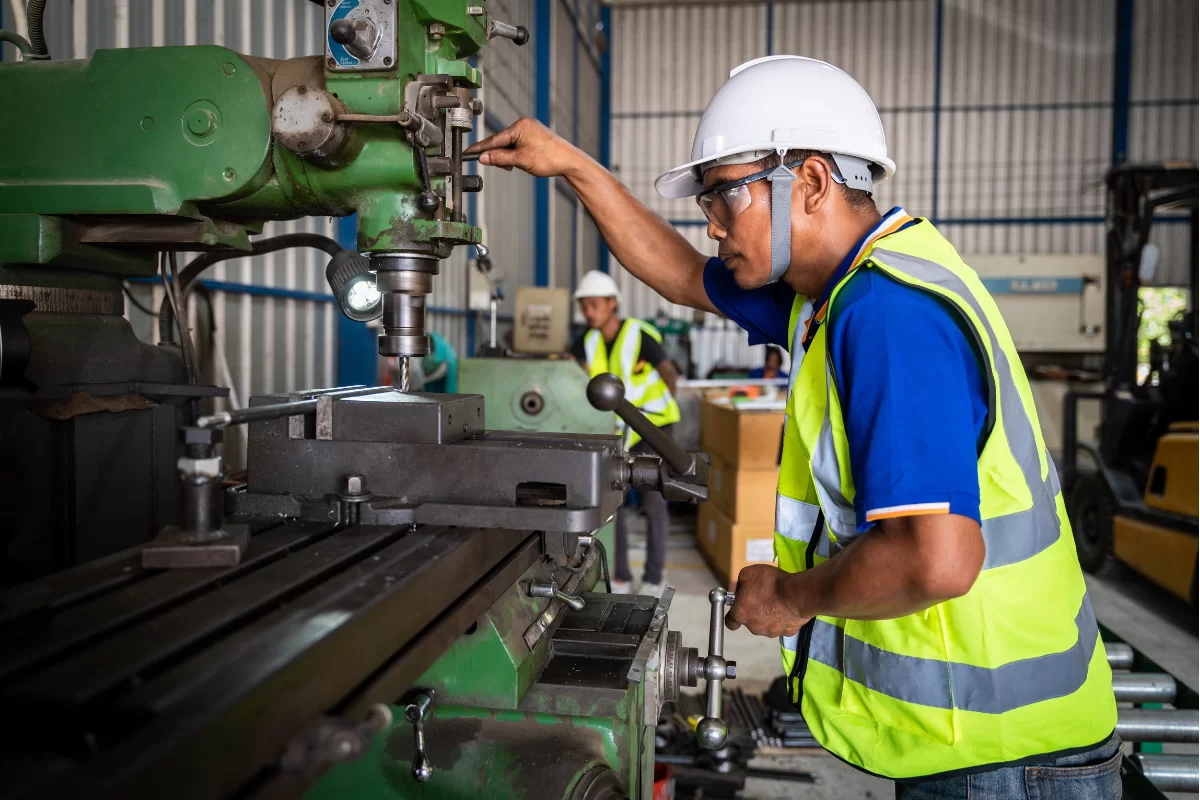
Manufacturing and heavy industry employ hundreds of thousands of Australians in roles that carry real physical risk. Factory environments present a range of hazards — from moving machinery and heavy loads to chemical exposure and slippery floors — that require systematic management to prevent injury and protect worker health. In Australia, workplace safety legislation sets a high standard, but compliance alone is not the ceiling for what responsible employers should aim for.
Safety culture in factories has evolved significantly over the past two decades. What was once a compliance-driven activity — doing the minimum required by law — has shifted toward a more proactive model in which businesses identify and address hazards before incidents occur. This shift has delivered meaningful reductions in workplace injury rates across the sector, though there is always more work to be done.
Understanding common factory hazards
Slips, trips and falls remain among the most frequently reported workplace injuries in Australian manufacturing. Factory floors exposed to oil, coolants, water and other liquids create treacherous conditions for workers wearing heavy boots and carrying loads. Elevated walkways, stairs and loading docks introduce additional fall risk that requires both physical safeguards and strong procedural controls to manage effectively.
Addressing floor safety is one of the most direct and cost-effective investments a factory can make. Appropriate heavy industry safety mats placed at machine operator stations, near coolant and lubricant areas, and along high-traffic walkways provide both grip and anti-fatigue benefits. Investing in the right matting for specific zones in a facility can dramatically reduce both slip incidents and the physical strain associated with long periods of standing on hard concrete surfaces.
Manual handling injuries, including strains and sprains from lifting, carrying, pushing and pulling, account for a significant proportion of lost time in Australian factories. Ergonomic assessment of tasks that require repetitive or heavy manual handling, combined with appropriate mechanisation where feasible, is one of the most impactful ways to reduce this category of injury across a facility.
Building a safety culture that lasts
Safety culture is not created by policies alone — it is shaped by leadership behaviour, communication practices and the extent to which workers feel empowered to raise concerns without fear of negative consequences. In factories where safety is genuinely valued, supervisors model safe behaviour consistently, near-misses are reported and investigated rather than dismissed, and workers are involved in identifying and solving hazards.
Safety inductions and ongoing training are fundamental to any effective safety programme. New workers are statistically at higher risk of injury, particularly in their first months of employment in a new environment. Comprehensive inductions that cover not just procedures but the reasoning behind them help workers understand why safety rules exist and are therefore more likely to follow them even when supervision is not present.
Investment in workplace safety sometimes parallels investment in other business areas. In the same way that brands like designer streetwear labels invest in the identity and culture that surrounds their products, manufacturing businesses need to invest in a safety identity — one where protecting workers is genuinely seen as central to how the business operates and represents itself in the industry.
Machinery safety and risk controls
Machinery-related injuries are among the most serious in factory environments. Entanglement, crushing, cutting and impact hazards associated with industrial equipment require multiple layers of control to manage effectively. Physical guarding is the primary control, preventing access to dangerous moving parts during normal operation. Guards must be correctly fitted, maintained and never bypassed, even temporarily.
Lockout-tagout procedures are essential for any maintenance or repair work on machinery. These procedures ensure that equipment is fully de-energised and secured before workers enter a danger zone, preventing inadvertent start-up that could cause catastrophic injury. Regular audits of lockout-tagout compliance help identify gaps before they result in a serious incident.
Safe operating procedures for each piece of machinery should be documented, accessible and regularly reviewed. Over time, informal variations in how tasks are performed tend to develop, sometimes creating hazards that were not present in the original procedure. Periodic review of procedures against actual practice ensures that written documents reflect reality and that any deviations are identified and addressed.
Personal protective equipment and its limitations
Personal protective equipment is often the most visible element of a factory safety programme, but it is also the last line of defence rather than the primary one. The hierarchy of controls — eliminate, substitute, isolate, engineer, administer, then personal protective equipment — is the correct framework for addressing hazards. PPE should be used when higher-order controls are not reasonably practicable, not as a replacement for them.
Selecting appropriate PPE for specific tasks and hazards is important. Generic safety boots and high-visibility vests are a starting point, but specific tasks may require hearing protection, respiratory protection, cut-resistant gloves, eye protection or specialised footwear. A risk assessment for each work area provides the basis for specifying appropriate PPE and ensures workers are not over or under-protected for their roles.
PPE programmes require ongoing management to be effective. Equipment that is worn, damaged or incorrectly fitted provides reduced protection and creates a false sense of security. Regular inspection, replacement schedules and training on correct fitting and use are all part of maintaining a PPE programme that delivers genuine protection rather than just the appearance of compliance.
Reporting, investigation and continuous improvement
Incident reporting systems are the foundation of continuous safety improvement. Factories that encourage reporting of near-misses and minor incidents, without attaching blame to individuals, gather invaluable information about where hazards exist and how close calls are occurring. This data, properly analysed, reveals patterns that would not otherwise be visible until a more serious event occurred.
Thorough investigation of incidents — using systematic approaches rather than surface-level assessments — identifies the contributing factors that made an incident possible. These factors often extend beyond individual behaviour to include system failures, inadequate training, design flaws and cultural pressures. Addressing root causes rather than symptoms is the only way to prevent recurrence.
Improving factory safety is a continuous process, not a project with a defined end point. The businesses that achieve the best safety outcomes are those that treat it as a core operational priority rather than a compliance exercise, investing in the systems, culture and physical environment that make safe work the default rather than the exception in every part of their operation.
