

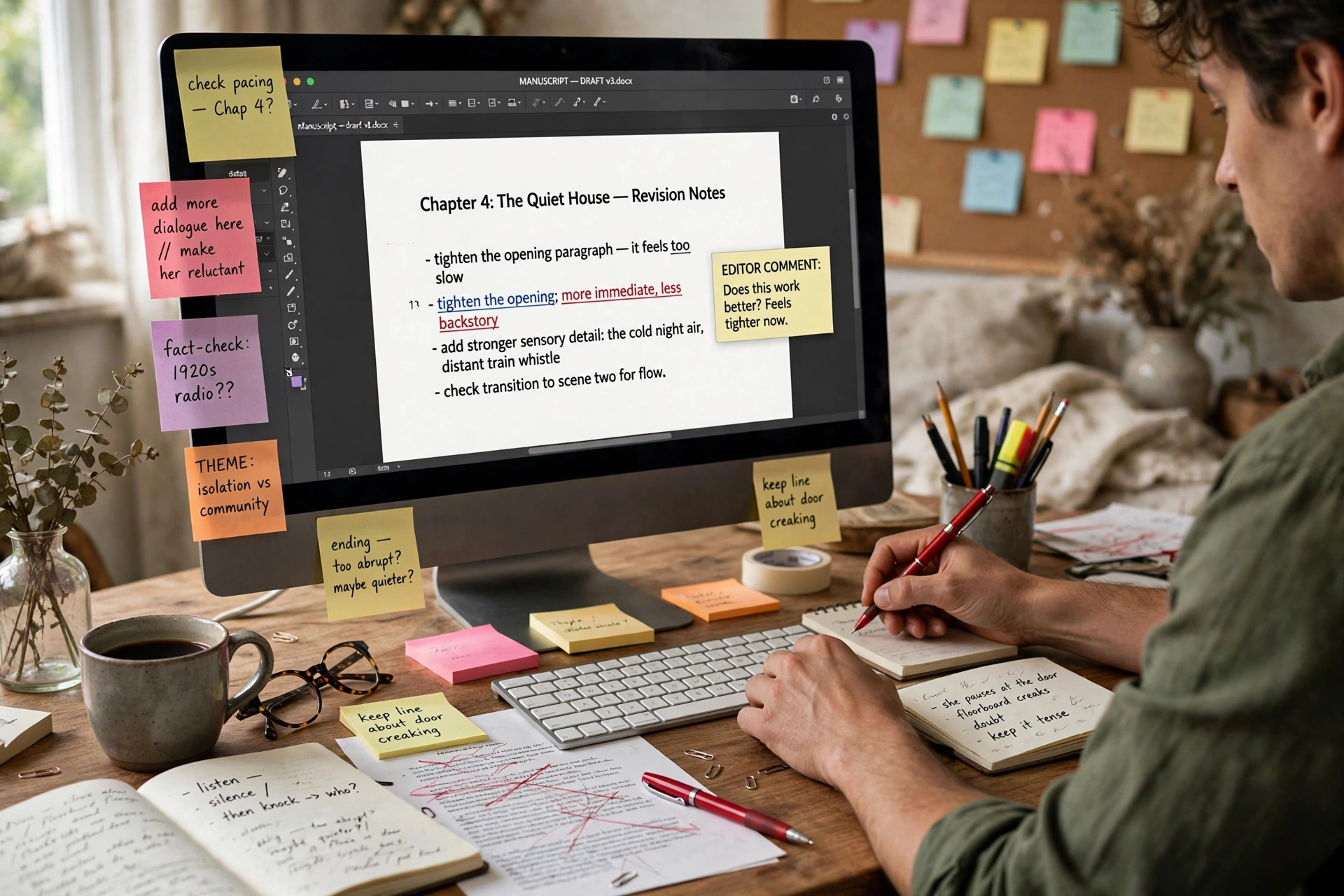
Every writer now has access to an editor that never sleeps, never charges by the hour and never quite understands the piece. AI editing tools — grammar engines, style checkers, summarisation assistants and full drafting aids — have become standard furniture in the writing process. The professional question is no longer whether to use them, but where their competence genuinely ends. Knowing that boundary is becoming a core writing skill.
Where the Machines Genuinely Help
Mechanical editing is the clear win. Tools in the class of Grammarly catch agreement errors, doubled words, tangled punctuation and clunky constructions with superhuman consistency, and they do it at the moment of writing rather than in a later proofread. Style guides can be encoded and applied across a whole publication or company, ending the serial comma wars by policy rather than by vigilance.
They are also strong at compression and restructuring: turning a rambling paragraph into three candidate rewrites, generating headline options, checking that a document’s reading level matches its audience, and transcribing interviews accurately enough to search. For writers working in a second language, the levelling effect is profound — the tools quietly erase the small errors that once consumed editors’ time and writers’ confidence.
Where Humans Still Win
Judgement is the first gap. An AI editor will happily polish a paragraph that should be deleted, tighten an argument that is factually wrong, and smooth a distinctive voice into the same competent porridge it produces for everyone. It does not know that the minister misspoke, that the quote is libellous, that the joke will offend the publication’s readers, or that the third example repeats the first. Research on newsroom AI adoption by the Reuters Institute, at reutersinstitute.politics.ox.ac.uk, finds editors consistently reserving exactly these calls — accuracy, taste, ethics, accountability — for humans.
Fact-checking deserves special warning. Language models produce plausible text, not verified text, and an editing pass can inadvertently launder an error: the sentence reads better, so it gets questioned less. Professional workflow therefore inverts the temptation — AI for the surface, human verification for every claim, name, number and date, without exception.
A Sensible Division of Labour
Draft as a human, with your own structure and voice. Run the machine pass for mechanics, consistency and compression options — accepting perhaps two-thirds of its suggestions and interrogating the rest. Then do a final human read aloud, the oldest editing technology there is, which catches rhythm and sense in a way no dashboard does. Writers who adopt this sequence report the real prize: not speed, but stamina — attention saved on commas is attention available for thinking.
The tools will keep improving at the surface of writing. The depths — what is true, what matters, what should not be said — remain stubbornly human territory. That is not a consolation prize; it is most of the job, as the writers in our look at the freelance market are discovering. Use the machine as the world’s most diligent copy desk, and keep the editor’s chair for yourself.
